
Crack & Joint Repair: what it involves
Most canal walls in west Pasco and coastal Hernando are rows of concrete or vinyl panels held up by a cap and a line of tiebacks. The seams between panels are where trouble starts. Once a seam opens, the tide moves water in and out of the backfill twice a day, and each cycle carries a little sand or crushed shell out to the canal.
Owners usually notice it in the yard first: a dip in the grass, a paver that sinks or a small hole a few feet back from the cap. At that point it's still a soil problem rather than a wall problem, and it's the cheapest seawall work you'll ever pay for. Wait a few seasons and the same void can undermine the cap and expose the tie rods.
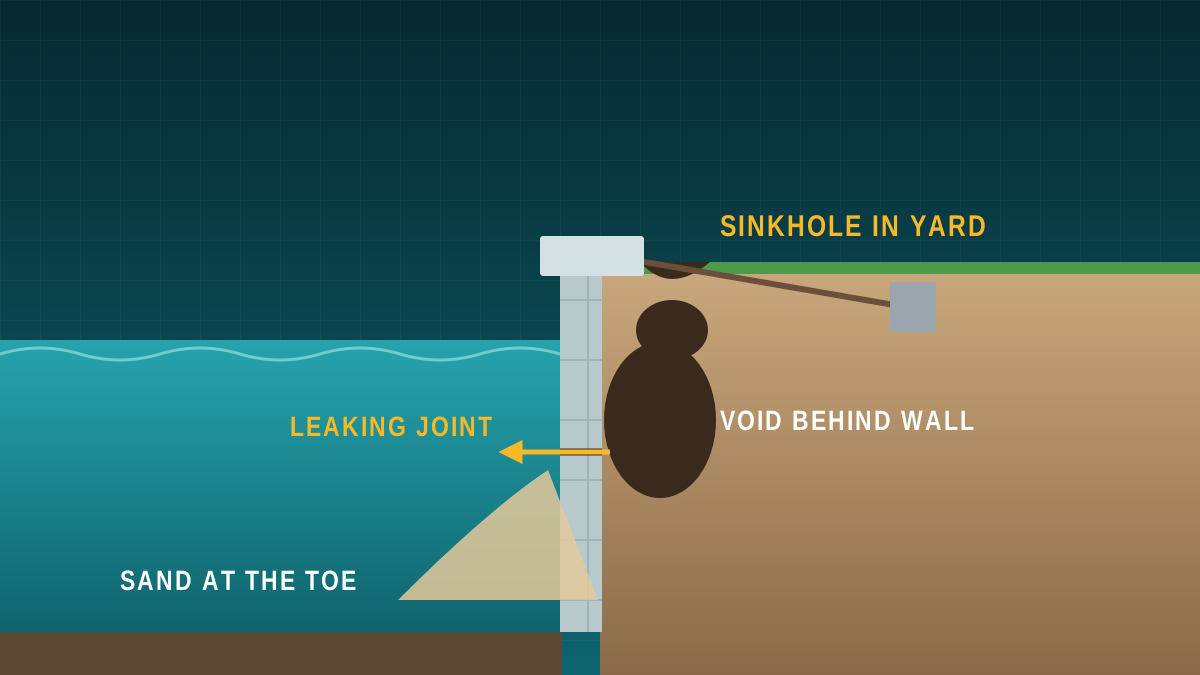
Signs a joint is leaking
- A hole or soft patch in the yard within a few steps of the wall
- A fan of sand or shell on the canal bottom at the base of the wall at low tide
- Water running out of seams as the tide falls
- Pavers, a pool deck or a dock landing settling or tilting
- Seams wide enough to see light or fit a finger through
Found a soft spot behind your wall? Get it probed before the next king tide.
Free EstimateCommon methods
Polyurethane foam injection
Injection ports are pushed into the soil behind the wall along the bad joints. A two-part foam is pumped in, expands into the voids and hardens into a watertight seal. Most jobs are done from the yard without heavy equipment.
Joint sealing from the water side
Open seams can be sealed or capped on the canal face at low tide, often alongside injection so the joint is closed from both sides.
Patching cracked panels
Cracks in panels are cleaned and filled with an epoxy or repair mortar. Since a cracked panel usually means the soil behind it has moved, patching is often paired with void filling.
Does joint repair need a permit?
Requirements depend on where your lot is and how much work is involved. In unincorporated Pasco, Pasco County Building Construction Services decides whether a job needs a permit, while New Port Richey and Port Richey have their own building offices and Hernando parcels go through the Hernando County Building Division. Get the contractor's answer in writing before they start.
- Address
- 8661 Citizens Drive, Suite 100, New Port Richey, FL 34654
- Phone
- (727) 847-8126
- Apply
- PascoGateway online portal
Source: Pasco County Building Construction Services, checked October 2026.
How a joint repair job usually goes
- Low-tide walkThe contractor walks the wall at low water, probes the yard for voids and photographs open seams.
- Void mapThey mark where soil is missing, how far back it runs and whether the cap or anchors are involved yet.
- Written scopeYou get the number of joints or feet, the method, the price and an answer on permits.
- InjectionPorts go in along the joint line and foam is injected in stages until the voids stop taking material.
- RecheckSod or pavers go back, and the contractor tells you when to look again, usually after the next very high tides.
Ask whether the warranty covers the same joints if they open again.
What joint repair costs
Angi's 2026 seawall repair guide puts general repairs at about $100 to $250 per linear foot, with small crack and joint fixes at the lower end. Injection is often quoted per joint or per foot, so a handful of leaking seams can cost much less than a structural repair.
Reference figure, not a quote: Angi seawall repair cost guide (2026 data), checked October 2026.
One leaking joint now costs far less than a failed panel later.
Free EstimateWhere joint leaks show up first
- Hudson BeachMiles of 1960s canal walls with aging seams
- Port RicheyLow-lying tidal canals near the river mouth
- Weeki Wachee GardensRiver current pulling fill through joints
- HolidayMixed-age walls on shared canals
- Land O' LakesLake level swings working on lake walls
- AripekaTidal creek flow on Hammock Creek
Related services: Leaning Seawall & Tieback Repair, Seawall Cap Repair, Seawall Inspections.
Crack & Joint Repair questions
Is every hole near the wall a seawall problem?
No. A leaking irrigation line or old buried debris can also cause holes. A hole that grows after high tides, or sand on the bottom at the base of the wall, points to a leaking joint.
Can I just fill the hole with dirt?
That hides the problem while the joint keeps losing soil. The hole usually comes back bigger after the next storm tide.
Does injection fix a leaning wall?
No. Foam fills voids and seals joints, but it won't hold back a wall that's tipping. That takes new anchors.